
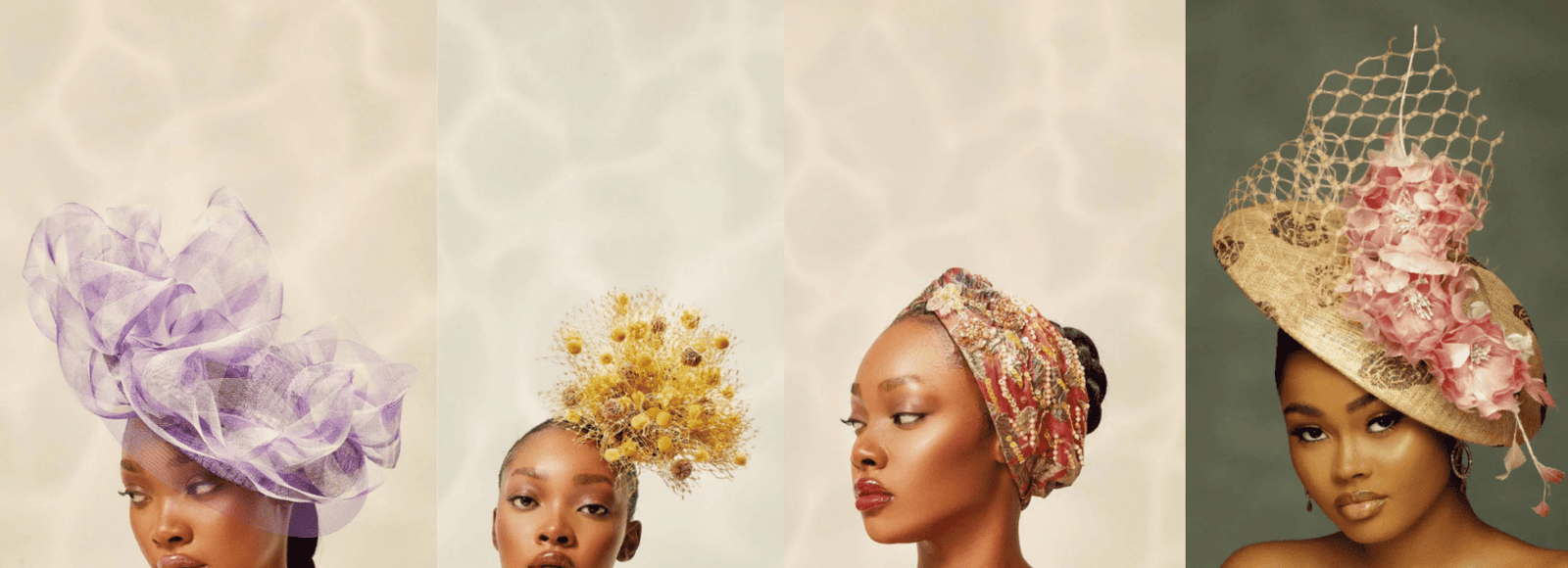
Europeans do not agree about hats. What reads as elegant in Paris reads as costume in Berlin. A Spanish wedding expects something on your head; a Dutch one absolutely does not — unless it is a Ghanaian one in Amsterdam, in which case all bets are off and the standard is high.
Italy: elegance over statement
Italian weddings are formal, long and photographed relentlessly. Headwear is welcome but restrained — the Italian instinct runs towards impeccable tailoring rather than dramatic accessories.
Wear: a small structured hat, a hatinator, or a sleek turban. Quality of fabric is noticed here more than anywhere else in Europe.
Avoid: anything oversized or excessively feathered. And never white or cream, which is treated as seriously in Italy as in Britain.
France: the sculptural approach
French wedding style favours the architectural — a headpiece that looks designed rather than decorated. The racing calendar, including the Prix de Diane, keeps a genuine millinery culture alive. Wear: clean, sculptural shapes. A well-cut turban is deeply at home in French occasion dressing, as is an asymmetric hatinator. Avoid: anything fussy. Fewer elements, better executed.
Spain: the most hat-friendly country in Europe
Spanish weddings — especially formal daytime ones in Seville, Madrid and across Andalusia — genuinely expect headwear from women guests, and the tocado, or headpiece, is a whole category of its own. Wear: a proper tocado or fascinator, worn at an angle. Bold colour is entirely welcome. Avoid: going bare-headed at a formal daytime ceremony, which reads as under-dressed rather than relaxed.
The Netherlands and Germany: understated by default
Dutch and German weddings are typically the most informal in Europe on the question of headwear. A hat is unusual and will be noticed. That is not a reason to skip it — it is a reason to be deliberate. A neat headband, a small fascinator or a turban worn as part of a strong outfit reads as personal style. A wide-brimmed hat at a garden wedding in Utrecht will feel like you have arrived from a different event.
The exception: diaspora weddings in Amsterdam, Hamburg, Brussels and Milan
Everything above describes majority-culture European weddings. A Ghanaian traditional marriage in Amsterdam Zuidoost, or a Nigerian wedding in Hamburg or Brussels, operates on completely different rules — and considerably higher standards. Here the headpiece is expected, the fabric is often coordinated across the family, and the competition is real. The two elements that let you stand out are the same as they are in Accra: what is on your head, and what is in your hand. Most guests across Europe are sourcing headpieces from the same small pool of online sellers, or having something tied at home. A structured turban hand-finished in Accra, or a handwoven clutch or potli bag made by Ghanaian hands, is genuinely uncommon in a European room — and it carries something a mass-produced piece cannot.

Practical notes for European buyers
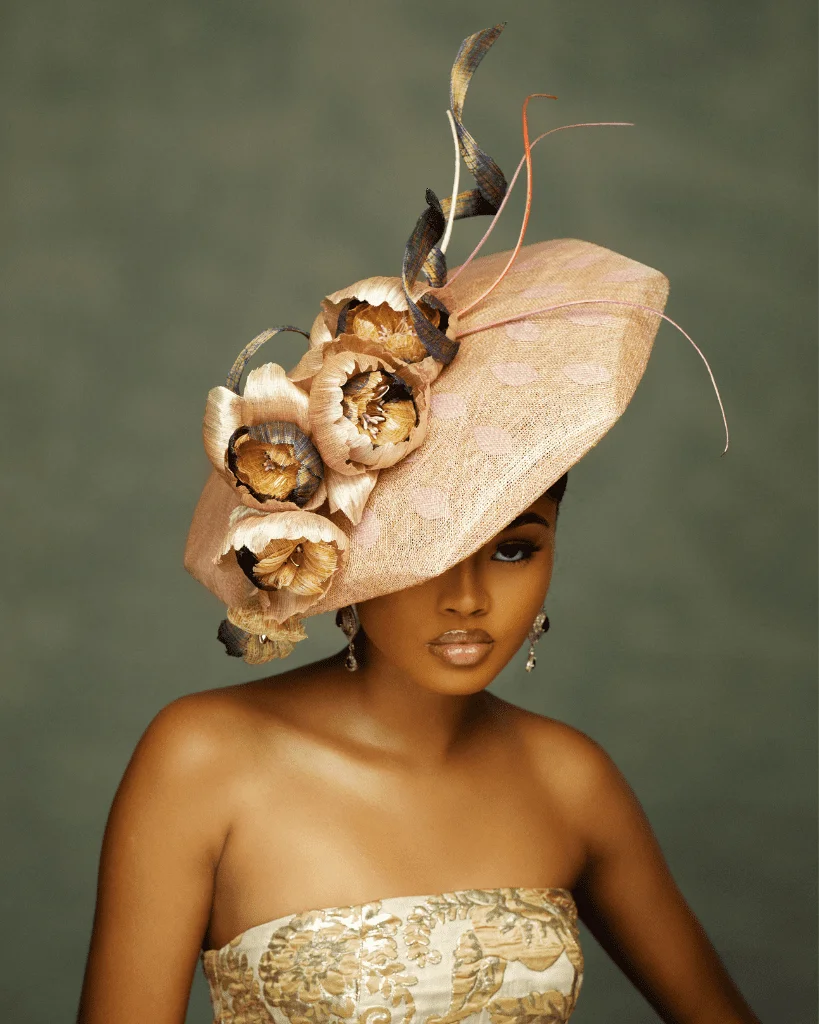
Weather. Northern European weddings run cold and wet even in June. Sinamay and feathers suffer in rain — a felt or fabric-covered base travels better. Ask us and we will steer you towards something that survives both the journey and the weather. Sizing. Measure around your head roughly a centimetre above the ears, across the mid-forehead. Hatinators and turbans are the most forgiving to order from a distance. Shipping and duty. EU import VAT and customs charges apply to orders from outside the bloc, and the rules shift periodically — check the current thresholds for your country when you order. We will be clear about timelines and documentation. Order early. European wedding season runs from May to September and our production is by hand, not by machine. Four to six weeks is comfortable; two weeks is a gamble. Browse our international collection, or send us your outfit, your country and your event date and we will suggest three options.